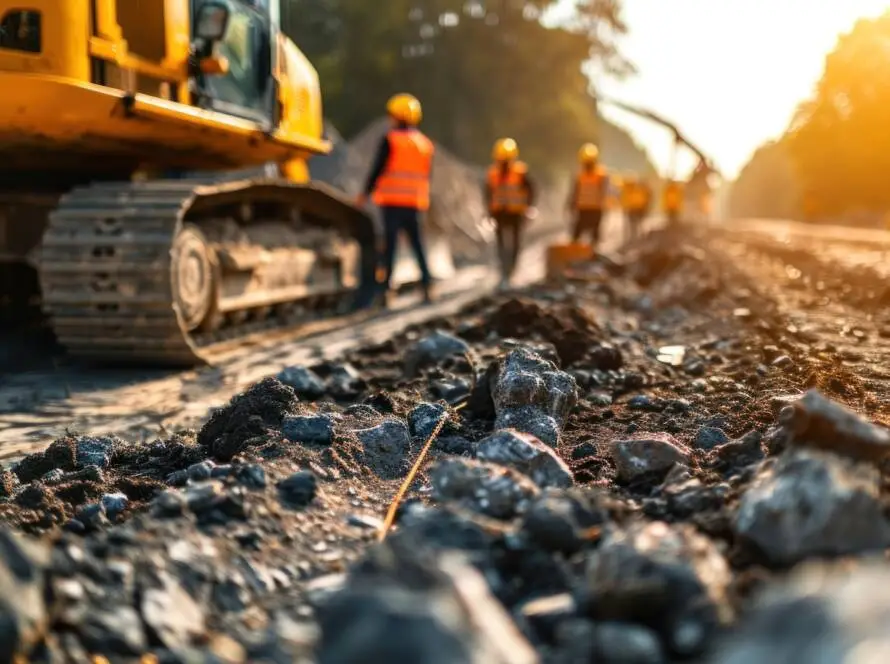
Construction sites are inherently high-risk environments where heavy machinery and human activity coexist in close proximity. From excavators and skidsteers to cranes and trench diggers, the diverse range of equipment on-site presents unique safety challenges. For safety leaders, ensuring the protection of workers while maintaining productivity is a constant balancing act, especially when dealing with the complexities of exclusion zones, alert systems, and the varying requirements of each machine.
In this article, we’ll explore the challenges of maintaining heavy machinery safety on construction sites and how advanced technologies like AI pedestrian detection systems, coupled with robust safety protocols, can significantly mitigate risks.
The Challenge of Exclusion Zone Complacency
One of the most significant challenges on construction sites is exclusion zone complacency. Exclusion zones are designated areas around heavy machinery where workers are prohibited from entering to prevent accidents. However, over time, operators and workers can become desensitized to these zones, leading to a dangerous disregard for their boundaries.
This complacency often stems from familiarity with the work environment and machinery, leading workers to underestimate the risks. For example, a worker might step inside an exclusion zone to retrieve a dropped tool, assuming it’s safe because they’ve done it before without incident. Similarly, operators may become too comfortable with their surroundings, assuming that workers will always stay clear of their equipment.
To combat this, safety leaders must continuously reinforce the importance of exclusion zones through regular training, clear communication, and consistent enforcement. Daily toolbox talks with a focus on safety can serve as reminders of the critical importance of maintaining safe distances and adhering to traffic management plans.
The Problem with False Alerts and Alert Fatigue
While technology plays a crucial role in improving construction site safety, not all systems are created equal. Traditional RFID tag-based systems, for instance, can generate a high number of false alerts. These systems often fail to differentiate between actual hazards and objects or individuals that pose no immediate risk, such as a worker walking behind a stationary machine or a piece of equipment that is not in motion.
Constant false alerts can lead to “alert fatigue,” where operators begin to ignore or disable safety systems altogether, undermining their effectiveness. This is a serious issue, as it can leave both operators and pedestrians vulnerable to collisions.
AI-powered pedestrian detection systems, like Proxicam, address this issue by using advanced object recognition technology to accurately identify human forms when they enter an unsafe proximity to heavy machinery. By eliminating false alerts and focusing only on real hazards, these systems ensure that operators are alerted only when there is a genuine risk, reducing alert fatigue and enhancing overall safety.
Customisable Detection Zones for Diverse Machinery
Construction sites are often a complex ecosystem of diverse machinery, each with unique operational requirements. For example, an excavator digging a trench may require its operator to stand next to it, using a cabled pendant control station to maneuver the equipment. In this scenario, a one-size-fits-all exclusion zone would be impractical, as it could hinder the operator’s ability to perform their job safely and efficiently.
AI pedestrian detection systems like Proxicam offer a solution to this challenge by allowing for customisable detection zones. These systems enable safety leaders to define multiple detection zones for each machine, tailored to its specific operational needs. For instance, a skidsteer may require just one 3 metre (9.6ft) rear exclusion zone to account for blind spots, while an excavator might need a 4 zones around the entire machine for 360º detection.
This flexibility ensures that safety measures are not only effective but also practical, allowing workers and operators to perform their tasks without unnecessary disruptions.
The Role of AI Pedestrian Detection Systems in Enhancing Safety
AI pedestrian detection systems like Proxicam represent a significant leap forward in heavy machinery safety. By leveraging advanced computer vision and machine learning algorithms, these systems can detect human presence in real-time, even in complex, low-visibility environments.
Key benefits of AI pedestrian detection systems include:
- Real-Time Alerts: Operators receive immediate visual and audible warnings when a pedestrian enters a predefined exclusion zone, allowing them to react quickly and prevent incidents.
- Customisable Zones: As mentioned earlier, these systems allow for multiple detection zones to be configured for each machine, ensuring that safety measures are tailored to the unique needs of the equipment and the site.
- Data-Driven Insights: Many AI systems, like Proxicam, also offer data analytics and reporting capabilities. Safety leaders can review incident data, analyze trends, and make informed decisions to improve traffic management plans and safety protocols.
- Ease of Installation: Modern systems are designed to be modular and easy to install, making them suitable for a wide range of machinery and site conditions.
The Importance of Clear Traffic Management Plans and Toolbox Talks
No safety system, no matter how advanced, can replace the need for clear traffic management plans and effective communication. Safety leaders must establish and enforce robust traffic management plans that clearly define machinery routes, pedestrian pathways, and exclusion zones. These plans should be communicated to all workers and updated regularly to reflect changes in site conditions.
Daily toolbox talks are another critical component of a comprehensive safety strategy. These brief, focused discussions provide an opportunity to address specific safety topics, reinforce best practices, and ensure that all workers are aware of potential hazards. Incorporating discussions about the role of pedestrian detection systems and other safety technologies can further emphasise their importance and encourage proper usage.
Heavy machinery safety on construction sites requires a multifaceted approach that combines advanced technology with robust safety protocols and consistent communication. By addressing challenges like exclusion zone complacency, alert fatigue, and the diverse requirements of heavy machinery, safety leaders can create safer work environments for everyone on-site.
AI-powered pedestrian detection systems like Proxicam provide a powerful tool for mitigating risks, offering real-time alerts, customisable detection zones, and data-driven insights. When paired with clear traffic management plans and daily toolbox talks, these systems can help safety leaders stay ahead of potential hazards and foster a culture of safety on construction sites.